Tamil Nadu · Sacred Pilgrimage Tours
Walk barefoot on centuries-old stone, feel the temple bells reverberate through your chest, and understand why Tamil Nadu's divine architecture has humbled pilgrims for over two thousand years.
Our guides don't just narrate history — they breathe life into myths, rituals, and architectural secrets that most visitors walk past.
Privately chauffeured, well-maintained vehicles connect every temple on your itinerary — no rushing, no crowded buses.
Rest in clean, peaceful accommodations chosen for proximity to temples — so the first sounds you hear at dawn are bells, not traffic.
From booking special pujas to navigating temple queues, we handle the logistics so you can be fully present in each sacred moment.
Discover the Sacred South
No other land on earth concentrates so much living faith into so small a geography. Tamil Nadu is home to over 33,000 temples — ancient, active, and achingly beautiful. These aren't ruins to photograph from a distance. They are breathing, chanting, incense-filled sanctuaries where the line between the everyday and the eternal simply dissolves. Our temple tours are designed for those who want to feel that dissolution, not just observe it.
From the sea-facing gopurams of Rameshwaram where Lord Rama is said to have prayed, to the 216-foot Brihadeeswarar tower in Thanjavur that has stood without a crack for over a thousand years — every temple on our circuit carries a story that has shaped millions of lives. Your temple tour in Tamil Nadu isn't a sightseeing trip. It's a conversation with history, myth, and human devotion across millennia.

The Sacred Circuit
Each of these shrines carries its own soul. Together, they form one of the world's most profound temple tour circuits — a journey through time, devotion, and Dravidian genius.

Standing where the Indian Ocean meets the Bay of Bengal, Rameshwaram holds 22 sacred wells, each with water of a different taste. The temple's outer corridor — nearly 200 metres long — is the longest in any Hindu temple on earth. Bathing here, the devout believe, washes away sins accumulated across lifetimes.
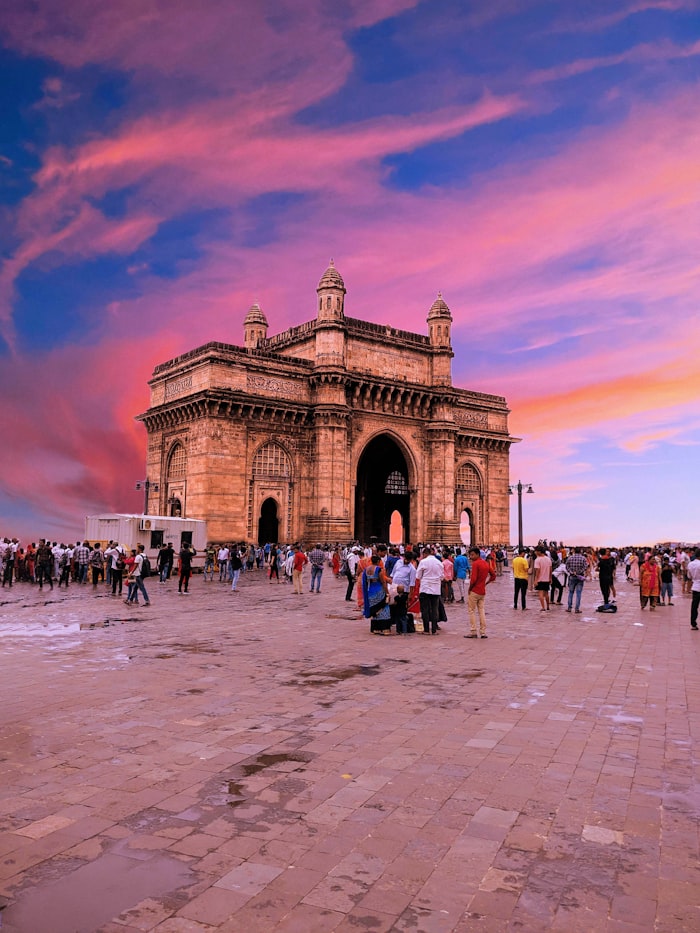
Built by Raja Raja Chola I in 1010 CE, the Brihadeeswarar's 216-foot vimana was the world's tallest at its completion — and it's still staggering. The capstone atop the tower weighs 80 tonnes and was placed there without cranes, mortar, or machinery. A UNESCO World Heritage Site and a testament to a civilisation at its absolute peak.

Fourteen towering gopurams, each encrusted with over 33,000 painted sculptures of gods, demons, and celestial beings — the Meenakshi Amman temple is sensory overload in the most sacred way. The temple city of Madurai itself grew around this shrine. Standing in the Hall of a Thousand Pillars at dusk, each column ringing faintly as you pass, is a defining experience of any temple tour.

Carved directly into a 83-metre granite outcrop that geologists estimate to be 3.8 billion years old, the Rockfort temple rises above Trichy like a citadel of the divine. Climbing its 344 steps, cut into living rock, you pass shrines dedicated to Ganesha and Shiva before the summit opens into a panorama of the Kaveri plains stretching to every horizon.

Spread across 156 acres on the sacred Srirangam island, Ranganathaswamy is the largest functioning Hindu temple complex on earth — essentially a walled city with 21 gopurams, 39 pavilions, and a living community of priests and devotees. The Vishnu deity here rests in a unique reclining posture, believed to be one of the most sacred in all Vaishnavite tradition.
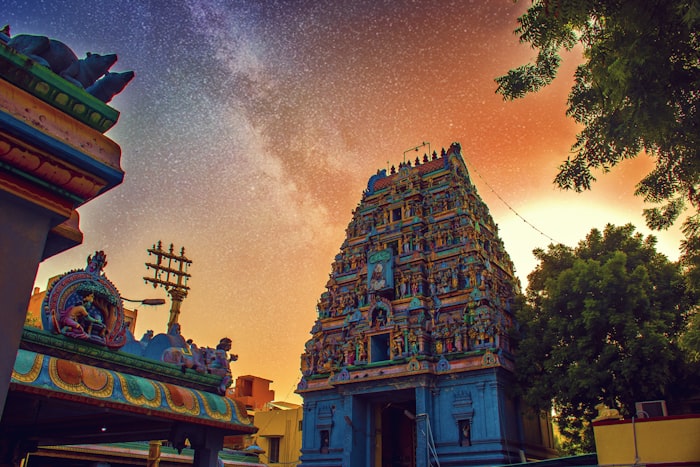
Perched 450 feet above the plains on a rocky hillock in the Western Ghats foothills, Palani is one of the six Arupadaiveedu — the holiest abodes of Lord Murugan. Pilgrims ascend by rope car or climb the ancient stone steps carrying kavadi in acts of extraordinary devotion. The idol here, made from a rare amalgam of nine herbs called navapashanam, is said to be over 2,000 years old.

Just 8 kilometres from Madurai, Thiruparankundram is among the most ancient of the six Murugan temples — a cave shrine carved into a granite hill, where multiple deities coexist within the same rock face. It's the mythological site of Murugan's marriage to Devasena, and the frescoes inside, painted centuries ago in earthy reds and ochres, retain a quietness that the busier pilgrimage centres don't.

The only one of the six Murugan abodes built on a seashore, Tiruchendur sits directly on the Coromandel Coast, where waves crash against its foundations and the smell of salt air mingles with camphor and flower offerings. The main deity faces the sea, said to watch over fishermen and sailors. Arriving at dawn when the horizon blushes and the temple bells begin is one of temple touring's quietly unforgettable moments.
Your Temple Tour Partner
Most temple tours hand you a brochure and a schedule. We take a different approach. Our guides are chosen not just for their historical knowledge but for their lived relationship with these shrines — many of them grew up visiting these temples with their own families, and that intimacy shows in how they share stories. When your guide explains why a particular pillar in the Meenakshi temple is dedicated to a specific celestial being, you're hearing family memory, not a museum placard.
Our temple tour packages are designed around your pace. If you want to sit for an hour in the silence of a pillared mandapam, we make space for that. If you want to participate in the evening aarti, we'll position you where the firelight reaches. We handle permissions, queue management, prasad bookings, and transport logistics so that every moment you spend inside these sacred spaces is spent in presence, not in planning.
Explore Temple Tour Packages →
Before You Go
October to March is ideal — cooler temperatures, active festival seasons, and beautifully illuminated gopurams during Karthigai Deepam and Thai Pusam. Avoid April to June when coastal temples like Rameshwaram see temperatures above 40°C.
Cover your shoulders and legs — sarees and dhotis are ideal, and many inner sanctums require men to be bare-chested. Remove footwear well before entering. Speak softly; temples are active places of worship, not tourist sites.
Tamil Nadu's major temple towns are connected by well-maintained highways. A private vehicle is strongly recommended for comfort and flexibility — the difference between a 6 AM gopuram dawn and a 9 AM crowd is enormous.
Rules vary by temple and by inner sanctum. Many allow photography in outer courtyards but not near the main deity. Your guide will always know the current rules — ask before raising your camera, and prioritise experience over documentation.
Each temple offers its own prasad — Palani's panchamirtham made with banana, honey, and ghee is legendary. Around major temples, traditional vegetarian eateries serve meals on banana leaves. Don't leave Madurai without trying the city's famous jasmine-scented filter coffee.
Temples like Ranganathaswamy and Meenakshi Amman have special archana and darshan slots that book out days in advance during festival periods. Plan your temple tour 4–6 weeks ahead if you're travelling around Pongal, Navaratri, or Karthigai Deepam.
Questions & Answers