Kochi has been a meeting point of cultures for 600 years — Portuguese walls, Jewish synagogues, Chinese fishing nets, and the scent of cardamom still drifting through Fort Kochi's lanes.
Every Kochi tour is built around how you actually travel — not copied from a template.
Heritage homestays in Fort Kochi, boutique hotels on the waterfront — we know the difference.
Three decades of South India expertise, with trusted ground partners across Kerala.
One dedicated contact from booking to the day you return. No call centres, no silence.
Kochi sits on a narrow peninsula on Kerala's Malabar Coast, where the Arabian Sea pushes quiet channels through a city that has never quite decided which century it belongs to. Arab, Chinese, Portuguese, Dutch, and British traders have all left something behind — a cathedral here, a spice godown there, a synagogue that has stood for 450 years. The result is a city that feels simultaneously ancient and completely alive.
Fort Kochi, the old quarter across the water from the mainland, is where most travellers fall for the city. You walk narrow streets under old trees, past art galleries and tea houses that smell of fresh ginger, and you reach the sea just as the giant Chinese fishing nets are lifting from the water at golden hour. Kochi doesn't announce itself. It simply draws you in, and then keeps you longer than you planned.
From century-old synagogues to the smell of pepper on a spice boat — these are the Kochi sightseeing moments our guests still talk about years later.
Standing at the tip of Fort Kochi as the sun sets, watching those enormous cantilevered nets creak and lift from the sea, is one of the defining images of Kerala travel. They've been here since the 14th century, likely introduced by traders from the court of Kublai Khan. You can pay a small fee to help haul one up — and then buy the catch for a roadside fish fry.
Built by the Portuguese in 1555 and handed over to the Cochin royal family as a gift — and later renovated by the Dutch — Mattancherry Palace holds some of the finest Kerala mural paintings in existence. The scenes from the Ramayana and Mahabharata that cover the walls were painted in a style so detailed, so luminous, that standing in front of them feels less like sightseeing and more like witnessing something.
The Paradesi Synagogue, built in 1568, is one of the oldest active synagogues in the Commonwealth. The floor is paved with hand-painted blue-and-white Chinese tiles, each one slightly different. Outside, the narrow lane of Jew Town is piled high with antiques, spice sacks, and curio shops — it's chaotic and wonderful in equal measure, and no Kochi tour should skip it.
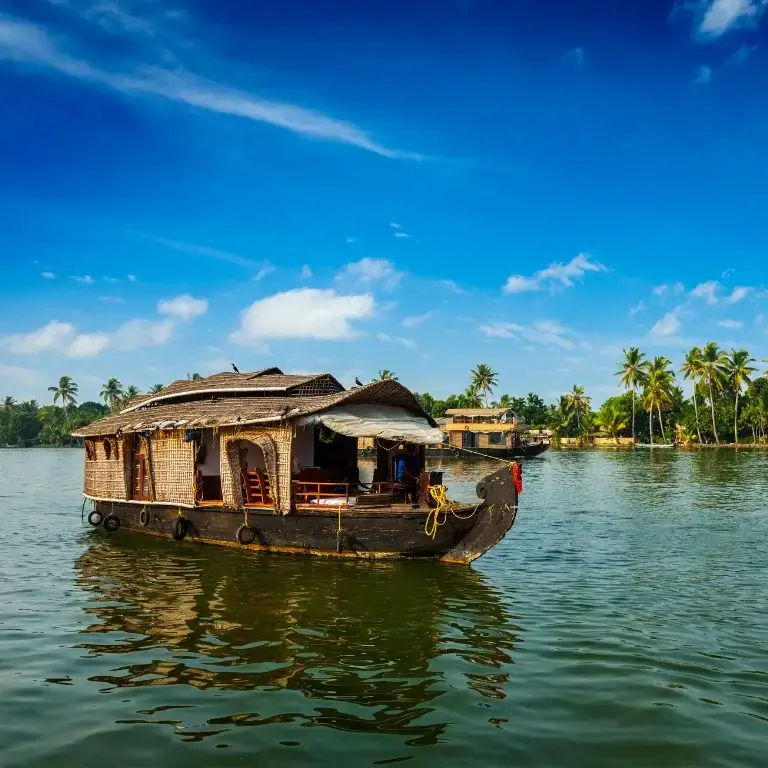
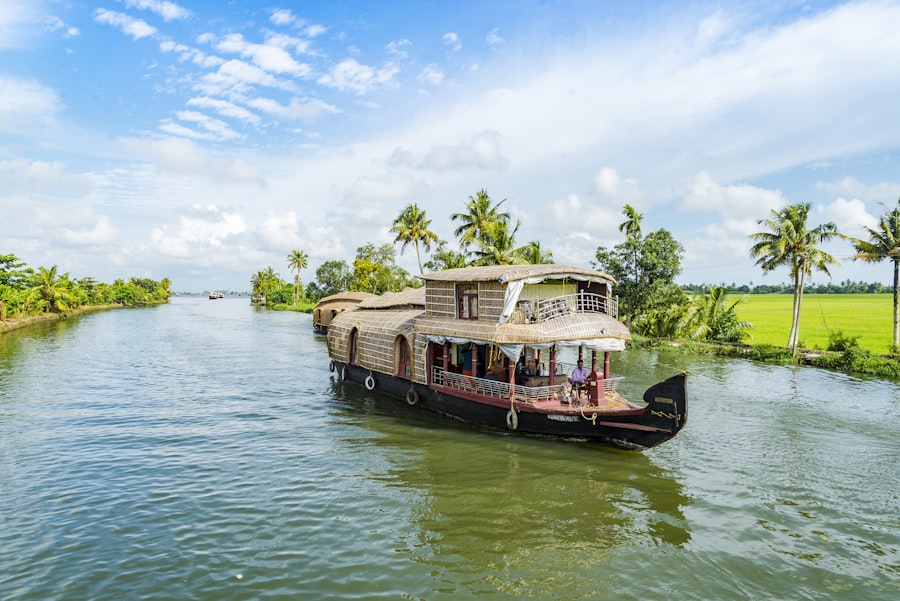
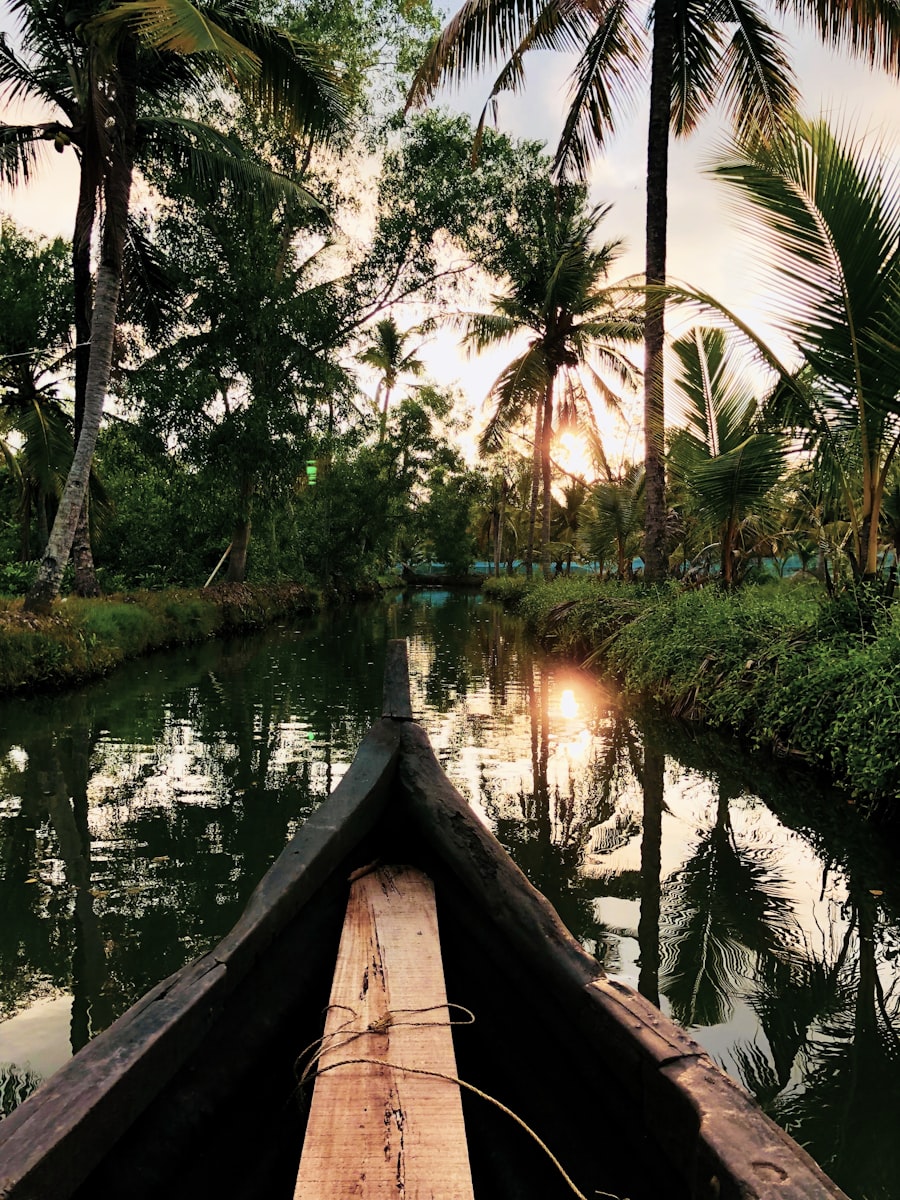
The backwaters around Kochi are a different world — a slow green labyrinth of canals lined with coconut palms, small villages, and the occasional duck boat. A half-day cruise from the city takes you into Vembanad Lake, where the light in the late afternoon goes amber and still, and the only sounds are birds and the soft knock of water against the hull. We include this in most of our Kochi tour packages.

Watching a Kathakali performance in Kochi is not optional — it's one of those experiences that reframes everything you thought you knew about performance art. The make-up alone takes two to three hours, and the facial expressions that follow — describing battles, love, betrayal, and the divine — are precise to the point of being almost supernatural. Several cultural centres in Fort Kochi offer evening shows with English commentary.
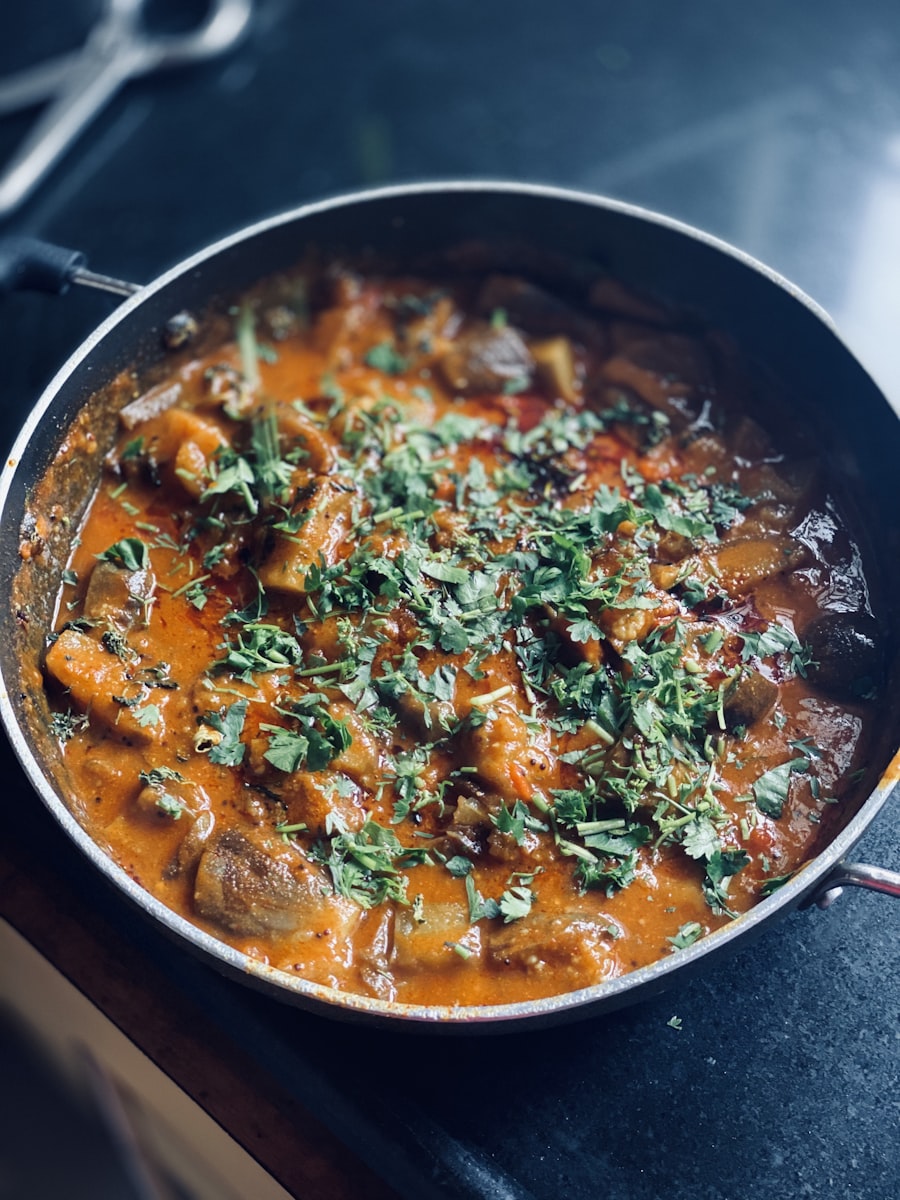
Kochi smells of pepper before you even step off the ferry. The spice warehouses of Mattancherry have been trading cardamom, cloves, and black pepper with the world for half a millennium, and you can still walk among them. Afterwards, eat at one of the small fish restaurants on the harbour road — order the karimeen pollichathu, pearl spot fish wrapped in banana leaf and grilled over coconut charcoal. It will ruin you for lesser food.
Pleasant Tours was born in Madurai — a city that understands temples, pilgrims, and the particular weight of history. We brought that sensibility to the way we build tours. When we send a traveller to Kochi, we're not handing them a list of monuments. We're introducing them to a city the way a friend would: starting with the ferry at dusk, ending with a meal you didn't expect, and fitting in all the stories in between.
Our Kochi travel packages are built around real time: time to wander Jew Town without a clock, time to catch the fishing nets at sunrise, time for a second cup of chai at a Fort Kochi café. We handle every logistics detail — transfers, stays, guides, ferry tickets, cultural show bookings — so the only decision you need to make is what you want for breakfast.
See Kochi Packages
Thirty years of sending travellers to Kerala means we've figured out the details that actually matter.
October to March is the sweet spot — humidity is manageable, the skies are clear, and Fort Kochi's streets come alive with the Biennale (December–March). Monsoon season (June–August) has a different, quieter beauty, but some boat services reduce frequency.
Cochin International Airport (COK) is well connected from Chennai, Bangalore, Mumbai, and Delhi, as well as Gulf cities. From Madurai, the train to Ernakulam Junction takes roughly six hours on the Madurai–Ernakulam Express — scenic and comfortable. We arrange airport and station pickups for all our guests.
Stay in Fort Kochi if you want character — old bungalows, canopied streets, walking distance to the heritage sites. Stay in Ernakulam (the mainland) if you want modern amenities and easy transport links. We recommend at least two nights on the Fort Kochi side; waking up to the sound of crows and sea is worth it.
Light cotton or linen clothes are ideal year-round. Carry a light scarf for synagogue and church visits. Good walking shoes matter — Fort Kochi's old town is best explored on foot. A small daypack for ferry crossings is more practical than a large bag.
Beyond karimeen pollichathu, look for prawn moilee (a coconut milk curry so delicate it barely whispers), Kerala parotta with beef fry, and the filter coffee at old Irani-style tea shops in Mattancherry. Avoid the obviously tourist-oriented menus; the best food in Kochi is in the smallest, most unpretentious rooms.
The Kochi–Muziris Biennale (December to March) transforms Fort Kochi into one of Asia's great contemporary art events. Accommodation fills up months in advance. If your travel falls in this window, reach out to us at least three months ahead — we hold preferred allocations at select heritage properties.
Whether you want three days in Fort Kochi or two weeks through all of Kerala, we'll design a Kochi tour package that fits your time, your pace, and the kind of travel that actually means something to you.