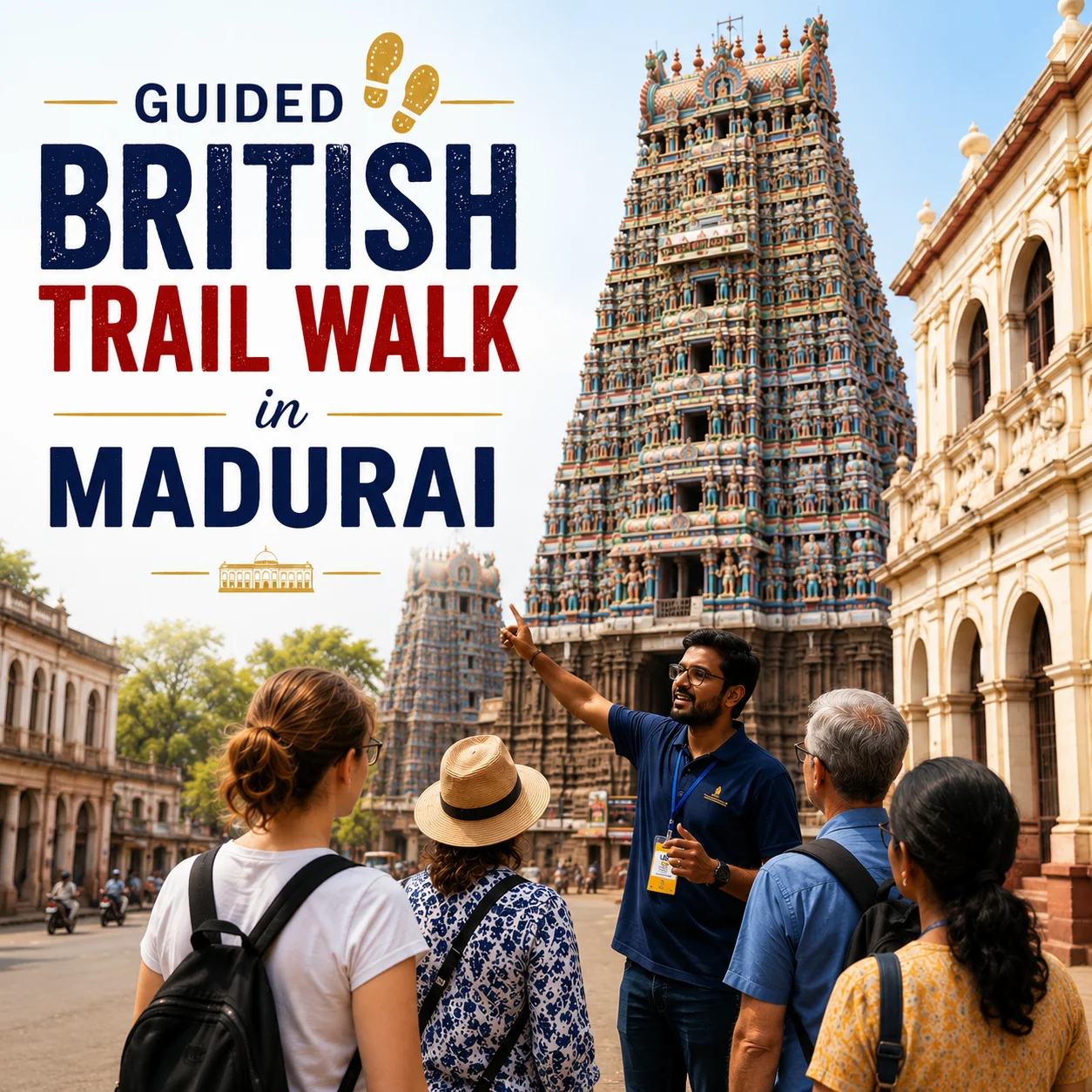
British Trail in Madurai – Colonial Heritage Walk | Pleasant Tours
Madurai · Heritage Trail

The British Trail in Madurai

Walk through two centuries of colonial history — from palatial hilltop bungalows and textile mills to stone churches and Anglo-Indian kitchens — across 13 remarkable landmarks in one of India's oldest living cities.

📍
13 Colonial Landmarks

A curated route covering churches, mills, cemeteries, civic buildings, and hidden heritage tucked into Madurai's streets.

📖
Stories, Not Just Stops

Every landmark carries a living narrative — Scottish brothers who built Asia's largest mill, a cemetery dating to 1770, a post office shaped like an aircraft.

🍴
Anglo-Indian Lunch

The trail ends with an authentic Anglo-Indian meal at Cheryl's Kitchen — a cuisine that carries the flavours of British India to your plate.

👤
Local Guided Experience

Led by guides who grew up in these neighbourhoods — with family memories intertwined with the landmarks they walk you through.

Where Two Histories Meet

Madurai's Colonial Chapter

Most visitors come to Madurai for the towering gopurams of the Meenakshi Amman Temple and the ancient Nayak legacy. But there's another layer to this 2,500-year-old city — one that hums quietly through stone churches, railway arches, crumbling textile mills, and street names that still carry British surnames. The British Trail in Madurai traces that overlooked chapter.

When the British consolidated power in the region after 1763, Madurai became a canvas for their ambitions — industrial, civic, religious, and architectural. Scottish entrepreneurs built cotton mills that employed thousands. Engineers designed a post office shaped like an aircraft from above. Missionaries raised hospitals that still serve the city today. What remains isn't a museum — it's a living cityscape where colonial stone meets Tamil soil, and every wall has a story if you slow down long enough to listen.

Colonial architecture in Madurai — heritage buildings along the British Trail
The 13-Stop Heritage Route

Walk the British Trail in Madurai

1 Pasumalai hilltop bungalow — now Taj Hotel on the British Trail Madurai
Est. 1890s

Pasumalai – Taj

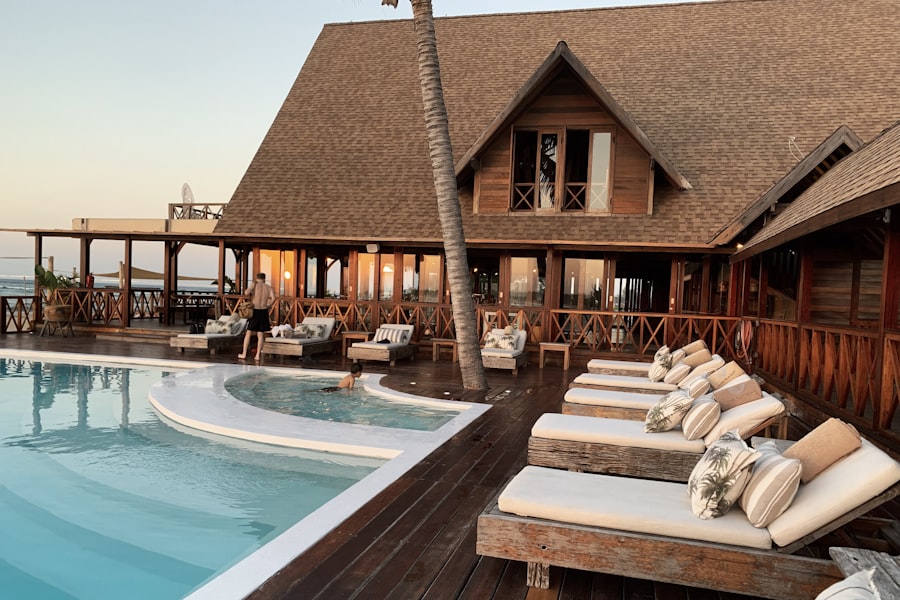
William Harvey built a palatial bungalow atop Pasumalai hill in the 1890s. By the 1970s it became a school for mill executives' children. In the 1980s, the Taj group transformed it into a heritage hotel — and today you can sip morning tea where a Scottish industrialist once watched the sun rise over Madurai.

2 Madura Coats textile mill — British industrial heritage in Madurai
Est. 1889

Madura Coats Textile Mill

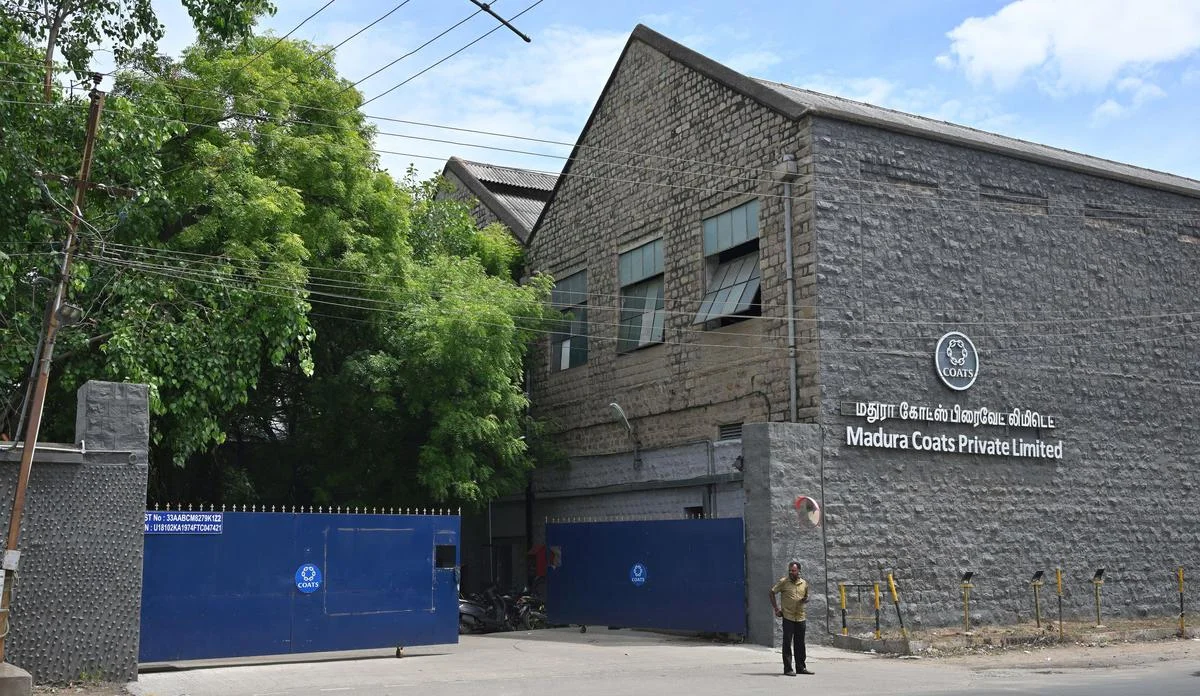
Two brothers from Scotland — Andrew and Harvey — started what became the largest cotton mill in India and the second largest in Asia. Incorporated in 1889, the Harvey Mills (later Madurai Mills) powered the city's economy for generations. The workers' settlement at Harveypatti even had a "toy train" that ferried labourers to the mill and back each day.

3 Heritage Madurai — formerly Madura Club, colonial officers' residence
Est. 1923

Heritage – Earlier Madura Club

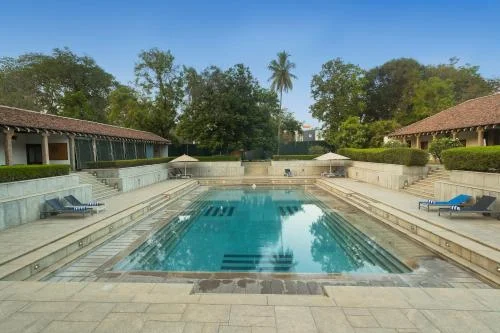
Built in 1923 as the residence for British officers of Madura Coats — the same textile company that gave the world brands like Louis Philippe and Van Husen. In the 1970s, the renowned Sri Lankan architect Geoffrey Bawa designed the club house on the grounds of the officers' bungalows, adding a modernist touch to colonial bones.

4 Railway Colony Madurai — residential area for Southern Railways staff
British Colonial Era

Railway Colony

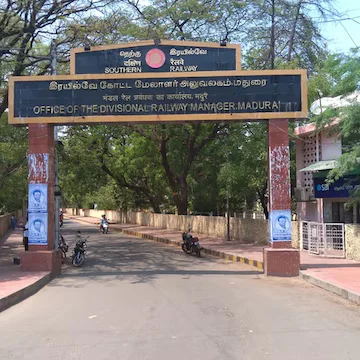
A self-contained world built for Southern Railways employees and their families — with living quarters, a recreation centre, a temple, a church, and a marriage hall all within its tree-lined lanes. Strategically placed near Madurai Junction, the colony still opens onto Karimedu market, a gateway that connected railway life to the city's commercial pulse.

5 Madurai Junction Railway Station — British heritage landmark since 1859
Est. 1859 & 1902

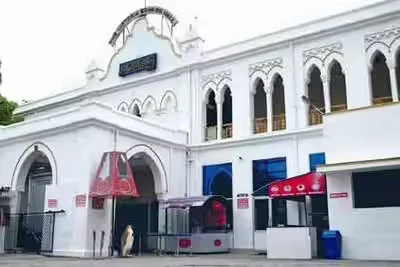
Madurai Railway Station & Victoria Edward Hall

The station opened in 1859 and stands among the finest heritage railway buildings the British raised across India. Nearby, Victoria Edward Hall — built in 1902 as Madurai's first closed auditorium — was named after Queen Victoria. In its time, it hosted British officials, theatre performances by legends like M.R. Radha and Ramadass, and English film screenings at the Regal Talkies next door.

6 Madurai General Post Office — colonial Indo-British architecture built 1931
Est. 1931

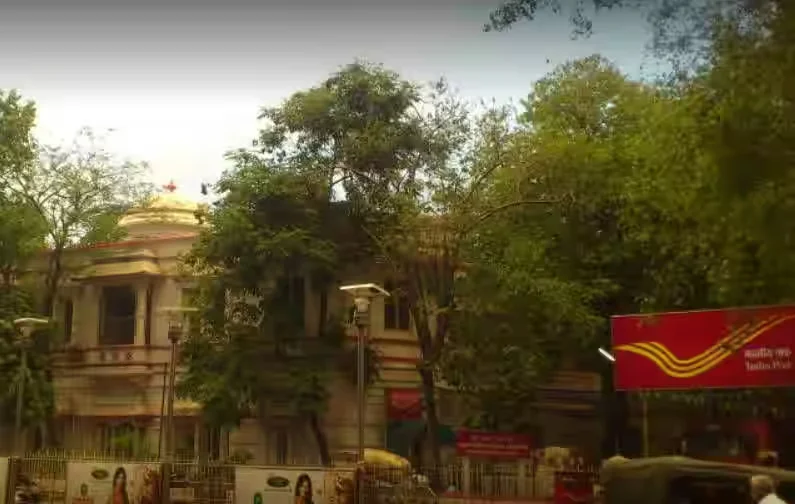
General Post Office

Stand on North Veli Street, look up, and you'll miss nothing — but view the GPO from above and it reveals itself: the building is shaped like an aircraft. The British designed it to handle mail from across the world. Constructed in 1931, it blends British balconies and arches with Indian stone pillars and aesthetics — a hybrid architecture that mirrors Madurai itself.

7 St. George's English Cemetery Kaaka Thopu Street — British graves dating to 1770
Graves from 1770

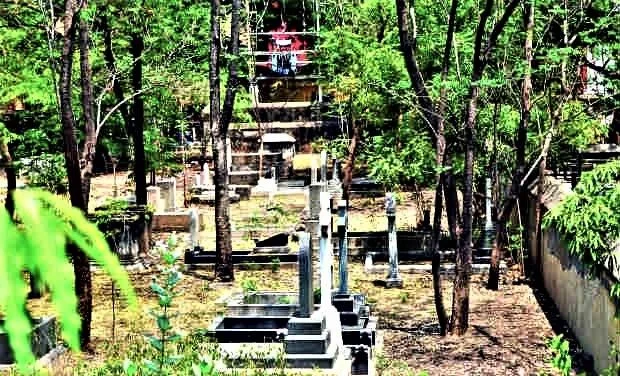
Kaaka Thopu Street – English Cemetery

Opposite Railway Colony sits St. George's English Cemetery — over two centuries old and the final resting place of East India Company generals, captains, and their families. The earliest grave dates to 1770, predating the official British acquisition of Madurai. A stone marker for Captain Christopher Theophilis, dated 18 May 1773, stands as one of the oldest surviving British records in the city.

8 St. George's Stone Church Madurai — built 1881 with black stones
Est. 1800 – Rebuilt 1881

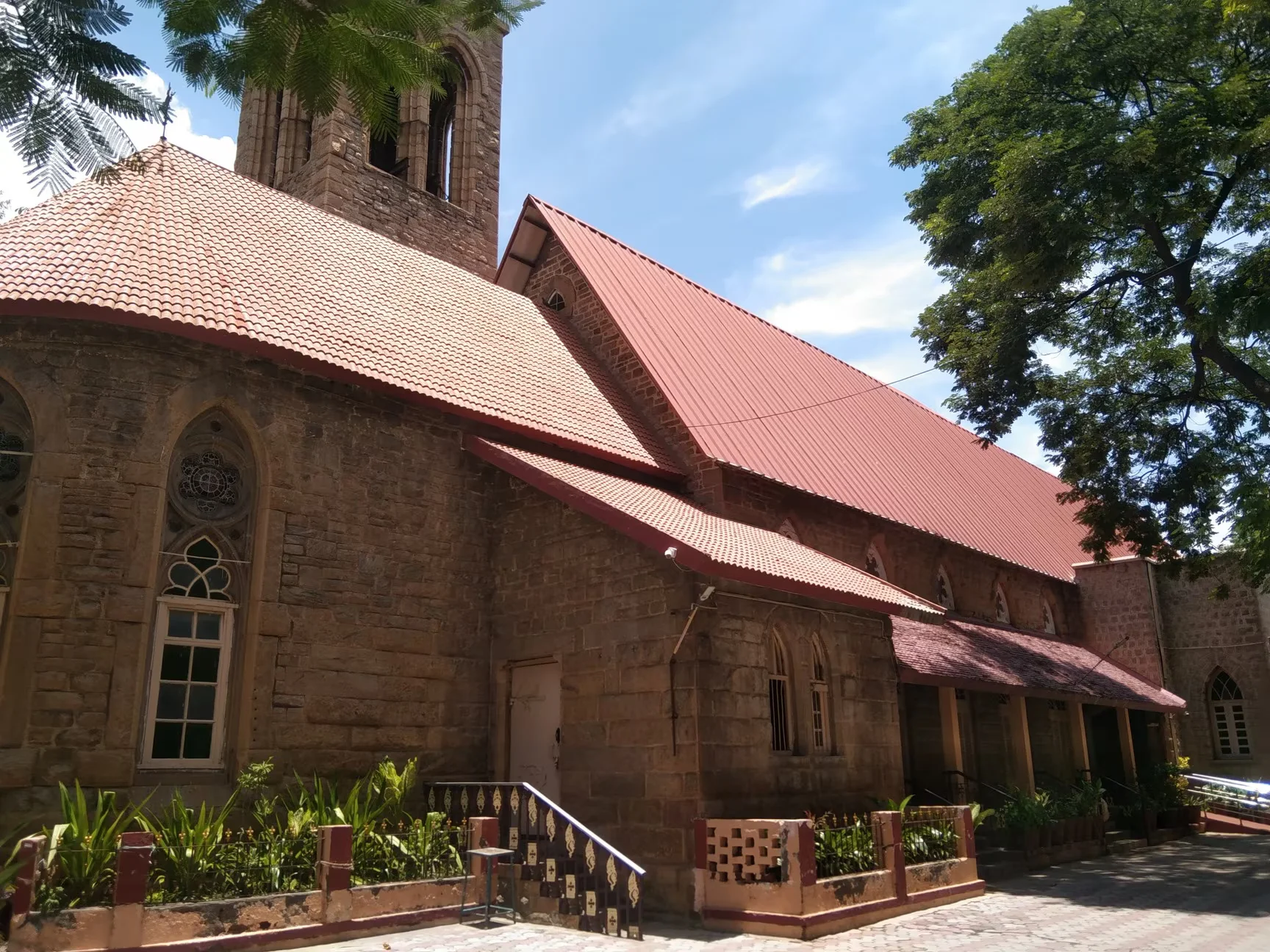
St. George's Church

When Madurai fell to the British in 1763, European troops followed — and so did their missionaries. Rev. Schwartz from Tanjore ministered here first. The current structure, raised in 1881, earned the name "Stone Church" because it was built entirely with black stones. Colonel J.F. Fisher laid the foundation, and Mr. Chisholm — consulting architect to the Government of Chennai — designed it.

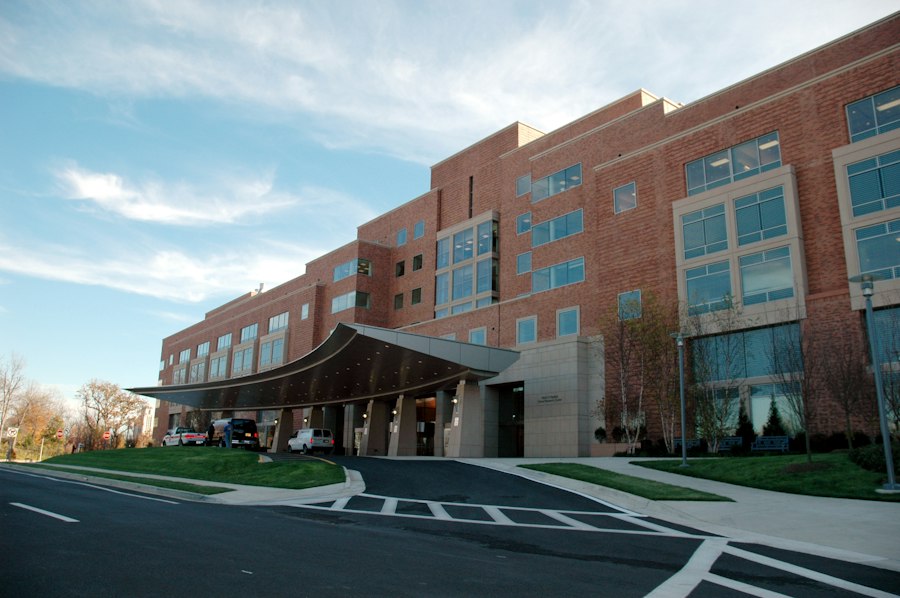
9 Christian Mission Hospital Madurai — missionary healthcare since 1849
Est. 1849

Christian Mission Hospital

What began as a small dispensary opened by American missionary Dr. C.S. Shelton in 1849 grew into a 350-bed hospital still serving Madurai today — over 170 years later. In 1937 it split into separate units for women and men, before reuniting in 1953. Doctors of both Western and Indian origin — names like Pauline Root, Harriet, E. Parker — shaped its legacy of care across generations.

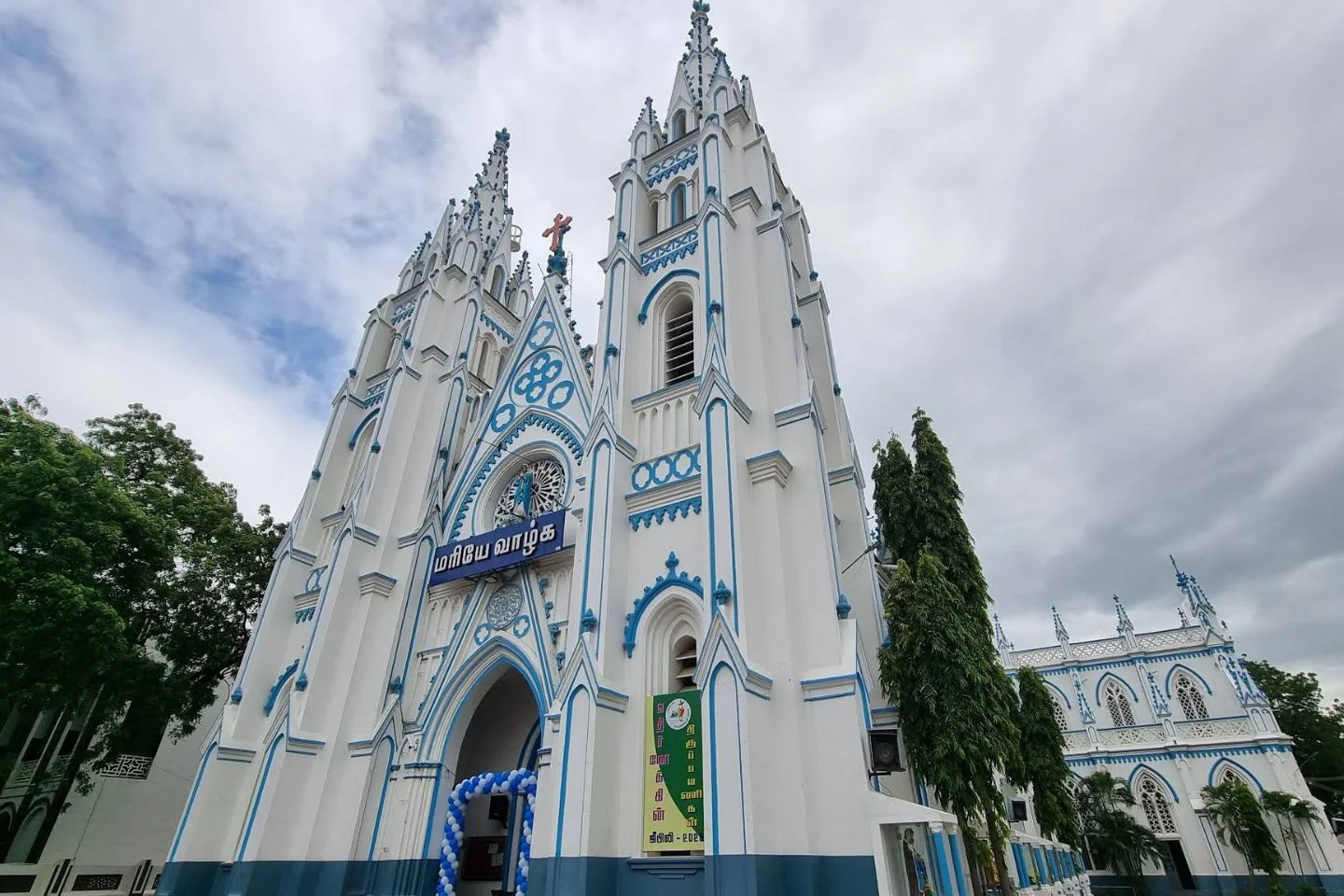
10 St. Mary's Cathedral Madurai — Gothic Roman Catholic church built 1841
Est. 1841

St. Mary's Cathedral

One of the oldest Roman Catholic churches in India, St. Mary's began as a modest chapel in 1841 and evolved through Gothic extensions into the cathedral that now towers over its parish. The architect Mr. Savarimuthu — who also built St. Joseph's College — designed the present structure. Its blend of European, Roman, and continental forms creates an atmosphere of quiet power.

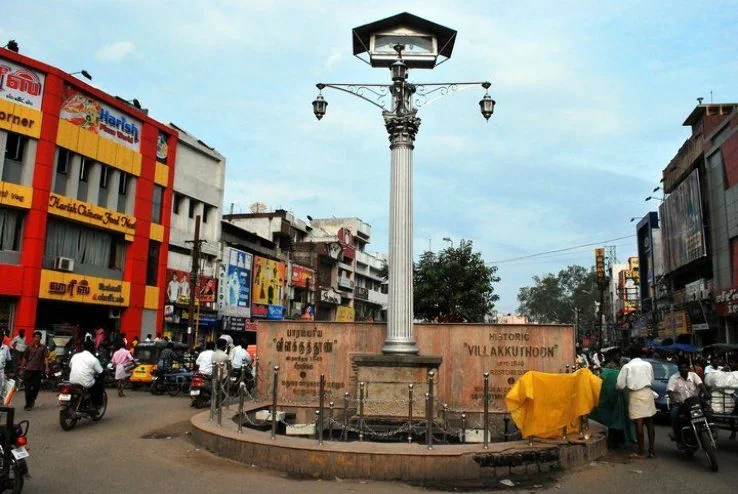
11 Vilakutoon lamp post monument — British civic revolution in Madurai
British Colonial Era

Vilakutoon – Lamp Post Monument

The imposing lamp post monument at Vilakutoon speaks of a radical civic transformation — the British Collector Blackburn ordered the demolition of the massive fortress walls and crocodile-filled moats around Meenakshi Amman Temple to create free passage through the Maestri and Masi streets. Nearby, the Albert Victor Bridge — over 100 years old — stands as one of the oldest and strongest bridges in Tamil Nadu.

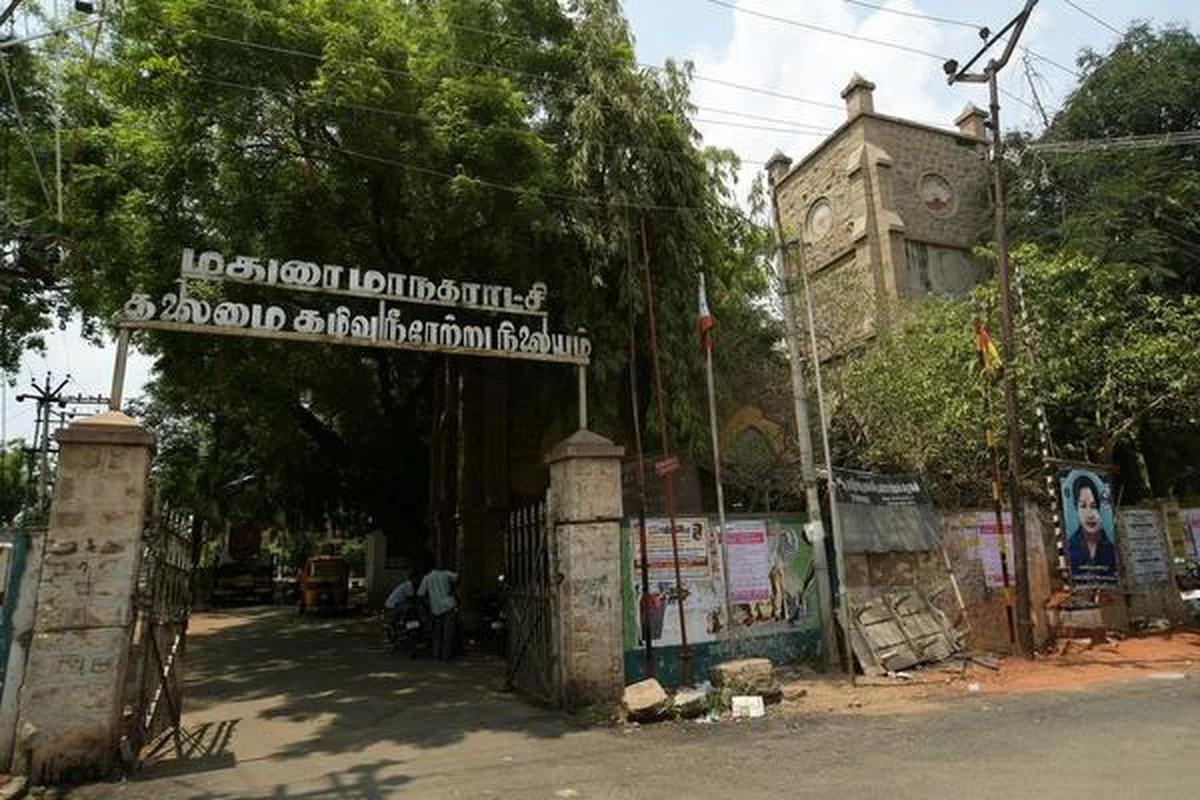
12 Santhaipettai pumping station — Madurai's colonial-era sewage system
Est. 1867

Santhaipettai Pumping Station

Madurai's waste water story goes back to 1865. When the city became a municipality in 1867, it adopted a sewage system that collected water from seven sub-stations, funnelled it through the Santhaipettai station, and pumped it 7 km to Avaniyapuram for treatment — protecting the Vaigai from pollution. The station sits on Kadar Khan Butler Street, named after a British officer's butler who lived beyond the city boundary.

13 Anglo-Indian lunch at Cheryl's Kitchen — heritage cuisine on the British Trail
Heritage Cuisine

Anglo-Indian Lunch at Cheryl's Kitchen

The trail doesn't end at a monument — it ends at a table. Cheryl's Kitchen serves authentic Anglo-Indian cuisine on a pre-booking basis: a food tradition that carries you from ancient India straight to the dining halls of British India. As part of the British Trail, Pleasant Tours arranges this meal for every guest — because heritage isn't just what you see, it's what you taste.

Since 1994

Why Walk the British Trail with Pleasant Tours

Most heritage trails in Madurai begin and end at the Meenakshi Temple. The British Trail is different — it takes you north of the Vaigai, through quiet lanes and forgotten bungalows, to parts of the city that even longtime residents haven't properly explored. Pleasant Tours has been running this route since the trail was first documented, with a team that doesn't just recite dates — they tell you about the butler whose name stuck to a street, and the toy train that no longer runs but whose tracks some old-timers still remember.

Every British Trail departure includes guided access to all 13 landmarks, an authentic Anglo-Indian lunch at Cheryl's Kitchen, and a narrative that connects the colonial past with the Madurai you see today. No rushed photo stops. No skipped stories. Just a slow, honest walk through a chapter of this city that deserves to be remembered.

Explore Our Heritage Packages
Guided British Trail walk in Madurai — Pleasant Tours heritage experience
Plan Your Walk

British Trail in Madurai – Travel Tips

01
Best Time to Visit

October to February offers the most comfortable walking weather. Mornings between 7 and 10 AM are ideal — the light is soft, the streets are quieter, and you'll beat the midday Madurai heat that can cross 38°C by noon.

02
What to Wear

Comfortable walking shoes are essential — the trail covers both paved roads and older cobblestone paths. Carry a cotton scarf for visiting churches and a hat or umbrella for sun protection during the open stretches.

03
Getting There

Madurai Junction railway station is a landmark on the trail itself. The nearest airport is Madurai International (IXM), about 12 km south. Pleasant Tours arranges pick-up from both for trail bookings.

04
Photography Tips

The General Post Office and St. Mary's Cathedral photograph best in early morning light. St. George's Cemetery has the most atmospheric mood during overcast skies. Carry a wide-angle lens if you want to capture the full façades.

05
Respect the Heritage

Several landmarks are active — the churches hold regular services, the hospital still treats patients, and the Railway Colony is a residential neighbourhood. Keep voices low, follow posted guidelines, and ask before photographing people.

06
Pre-Book the Lunch

The Anglo-Indian lunch at Cheryl's Kitchen is available only by prior arrangement. Pleasant Tours handles reservations for all trail guests — but if you're walking independently, contact the kitchen at least 48 hours in advance.

Step Into Madurai's Colonial Past

Thirteen stops. Two centuries of history. One unforgettable walk. The British Trail in Madurai is waiting — and so is the Anglo-Indian lunch at the end of it.

You cannot copy content of this page

Scroll to Top